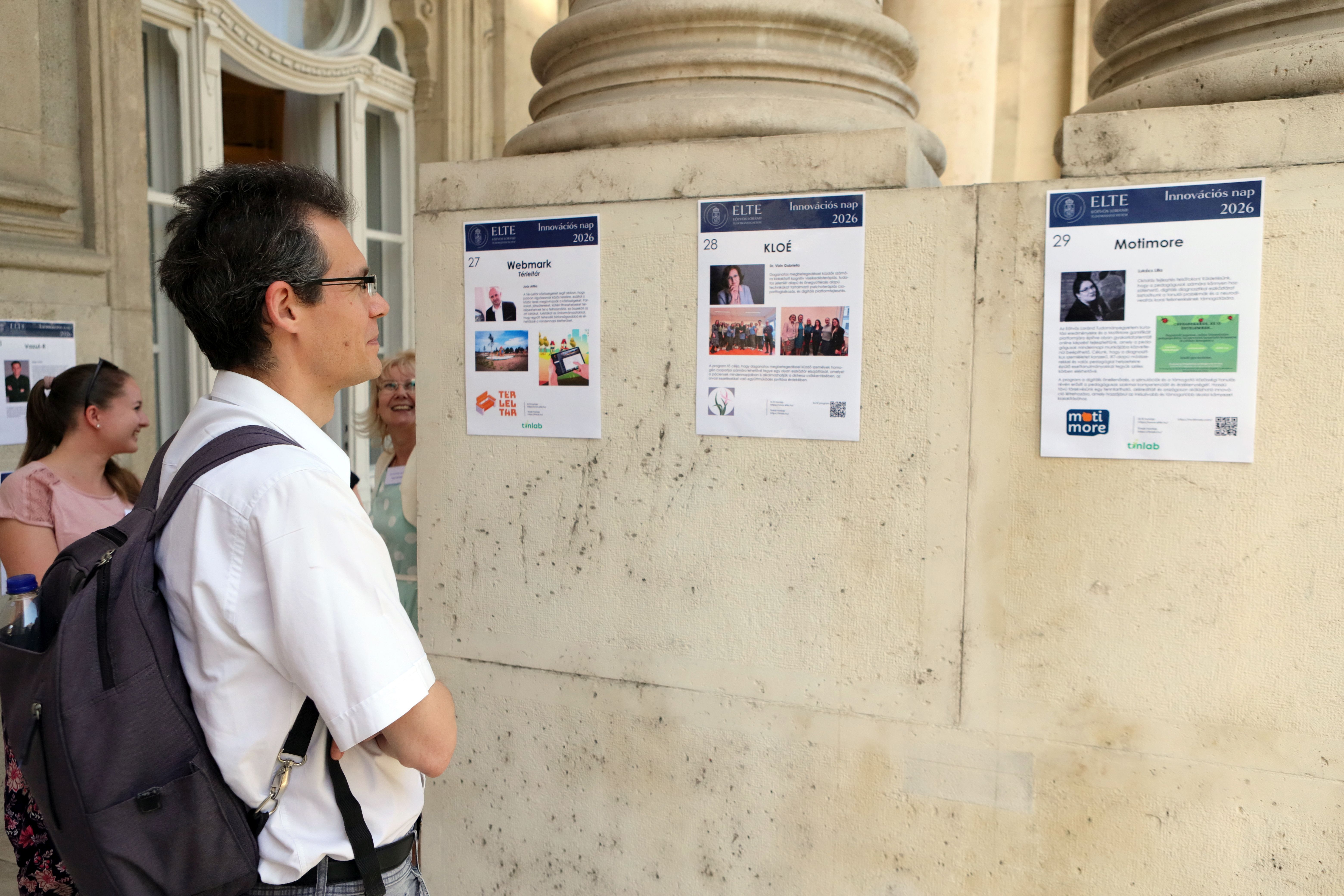
AI-supported research planning, a programme to improve the quality of life of cancer patients, self-awareness tools and sustainability projects were among the developments presented by ELTE PPK at the university's innovation event this year.
At ELTE Innovation Day, representatives from academia, industry and the third sector sought answers to questions such as where the university fits within the innovation ecosystem, when it is advisable to file a patent, and how academic freedom can be reconciled with the commercialisation of ideas. The programme also featured presentations on the university’s developments in healthcare and sustainability, and the ELTE Innovative Researcher Award was presented.
In his opening address, Rector Lénárd Darázs emphasised that, year on year, Innovation Day is organised around a topic relevant to the entire innovation ecosystem. This year, the focus was on how the impact of social innovations can be measured and realised.
Lecturers and researchers from ELTE PPK are also actively participating in the conference, where they have used presentations and posters to demonstrate how research in psychology, education and health promotion can be transformed into solutions that have a positive impact on society.
Health promotion and sustainability
Katalin Kovács presented the "ELTesi" project in the form of a talk and a poster. The initiative grew out of online PE lessons launched during the Covid-19 pandemic to become a course aimed at the entire university student body, offering personalised training programmes.
Gabriella Vizin's KLOÉ programme aims to improve the quality of life of cancer patients. As ELT EPPK’s first registered piece of know-how, the programme integrates cognitive behavioural therapy sessions and digital content, providing comprehensive support for cancer patients.
On her poster, Renáta Cserjési presented biofeedback-based breathing exercises. The aim of the gamified system is to support the learning of correct breathing techniques in a motivating and easy-to-follow format.
Eszter P.Remete's association card pack is designed to support mental well-being. This tool, which can be used as a means of self-awareness or in development groups, helps to evoke and articulate emotions, thereby contributing to the development of emotional intelligence, mentalisation and creativity.

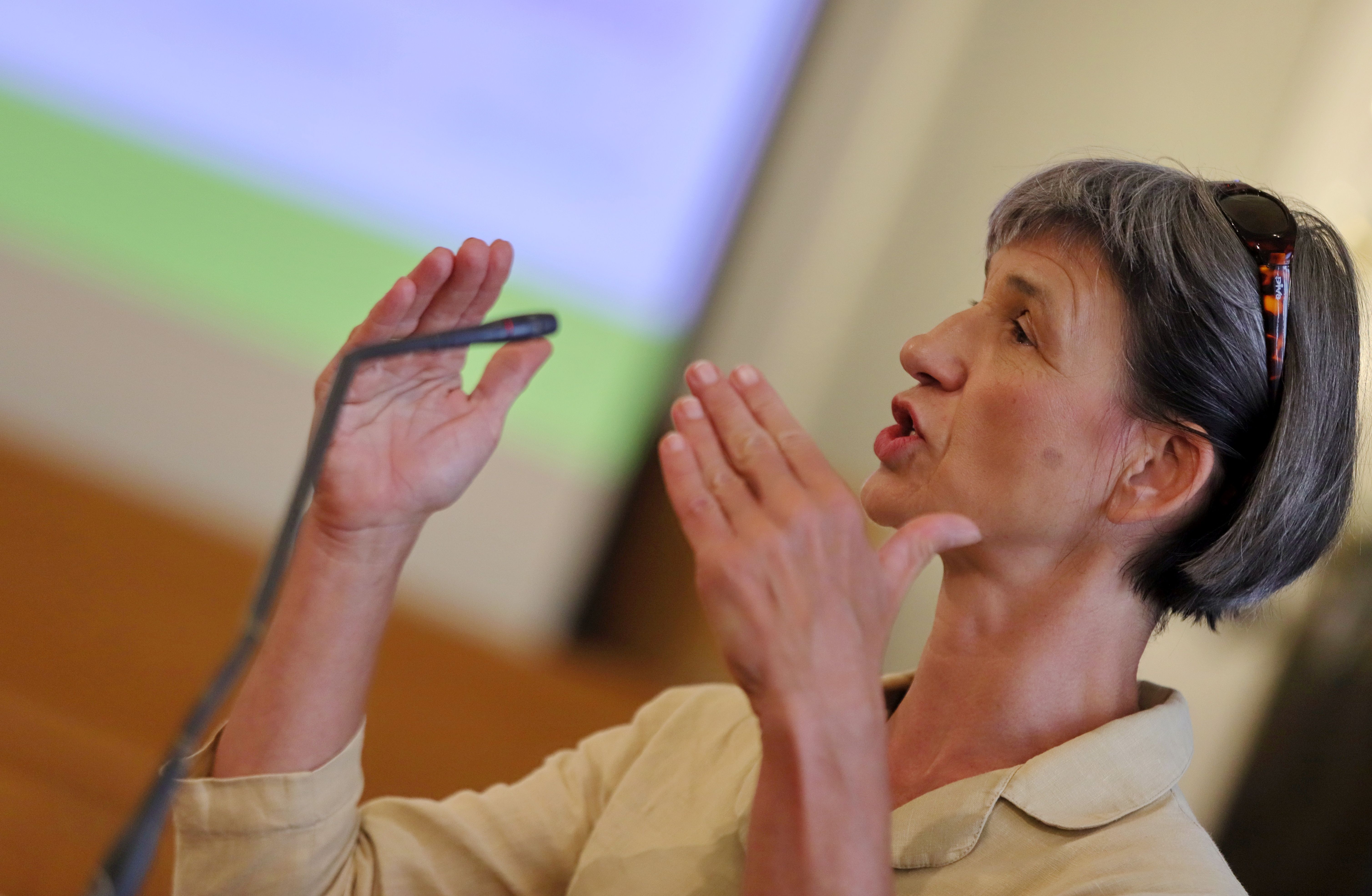
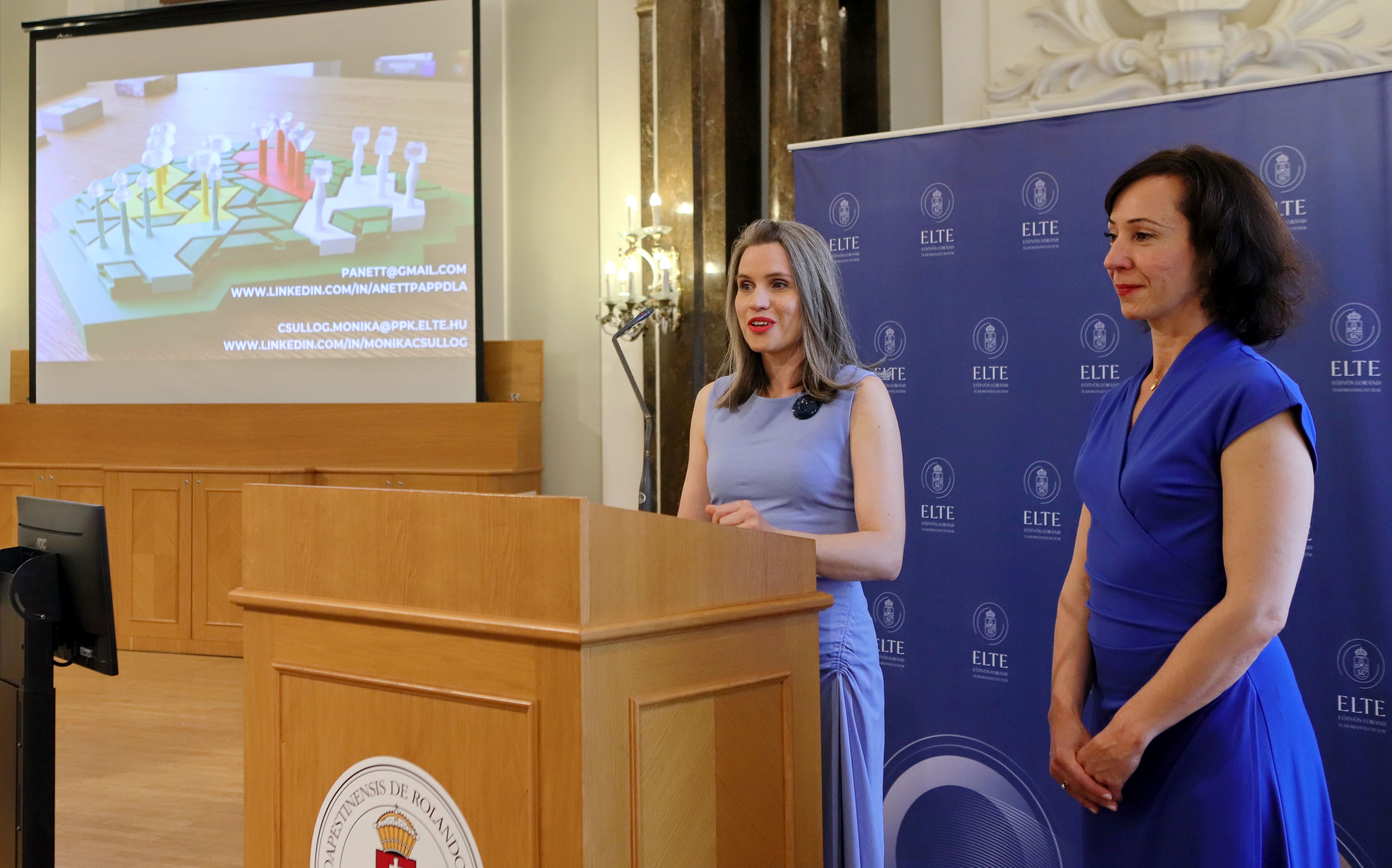
The afternoon session focused on ELTE’s innovations in the field of sustainability. This saw the debut of the Psych & Design Lab course, in which psychology students from ELTE PPK and design students from Széchenyi István University developed educational board games on the sustainable textile industry. The project was presented by Mónika Szilágyi-Csüllög and Anett Papp.
Innovation in research infrastructure
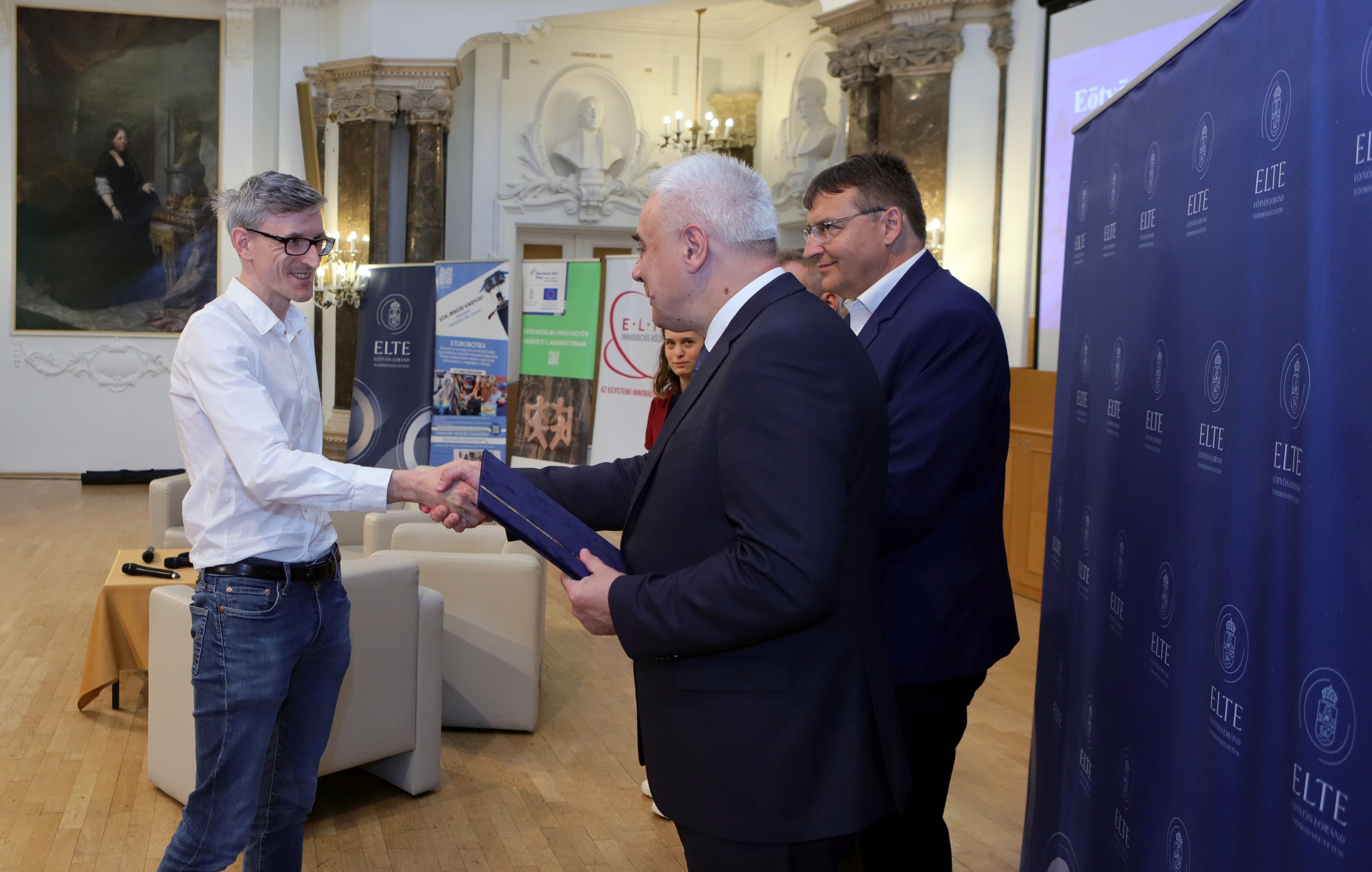
Zoltán Kekecs presented the innovation known as PreCheck – developed in collaboration with Balázs Aczél – to the audience in the form of a presentation and a poster, and was also awarded a certificate of recognition from the Vice-Chancellor. The artificial intelligence-based assistant, which has also been recognised with the Faculty Innovation Award, is capable of evaluating research proposals according to a structured set of criteria.
Attila Rausch presented the Research Ethics Committee's new online platform during the poster session. The aim of the system is to simplify the processing of research ethics applications, speed up the process and make it more transparent.
Tamás Nagy represented the PPK with the VAZUL R-package, developed through collaboration between Dutch and Hungarian researchers. This tool, designed to support blind data analysis, enables data to be analysed whilst reducing the risk of bias in the results.
A student pitch competition was also held on Innovation Day, with Tímea Gedeon, the PPK’s innovation manager, serving on the judging panel.