How can we prepare children for a rapidly changing world? Why is volunteering important? What does inclusion mean, and what role might universities play in this? These were among the questions addressed on 24 September at a joint event organised by the Institute of Education at ELTE PPK and Edisonplatform.
Organised with the aim of establishing a new tradition, Corporate Social Responsibility Day provided a meeting point for members of the university community and civil society organisations, and highlighted specific ways in which we can get involved as volunteers in various social causes.
Responsibility for the future and for one another
“Responsibility begins when we realise that our decisions and our work have a direct impact on the society around us,” said Andrea Dúll, Dean of the Faculty of Education and Psychology at ELTE, in her opening address.
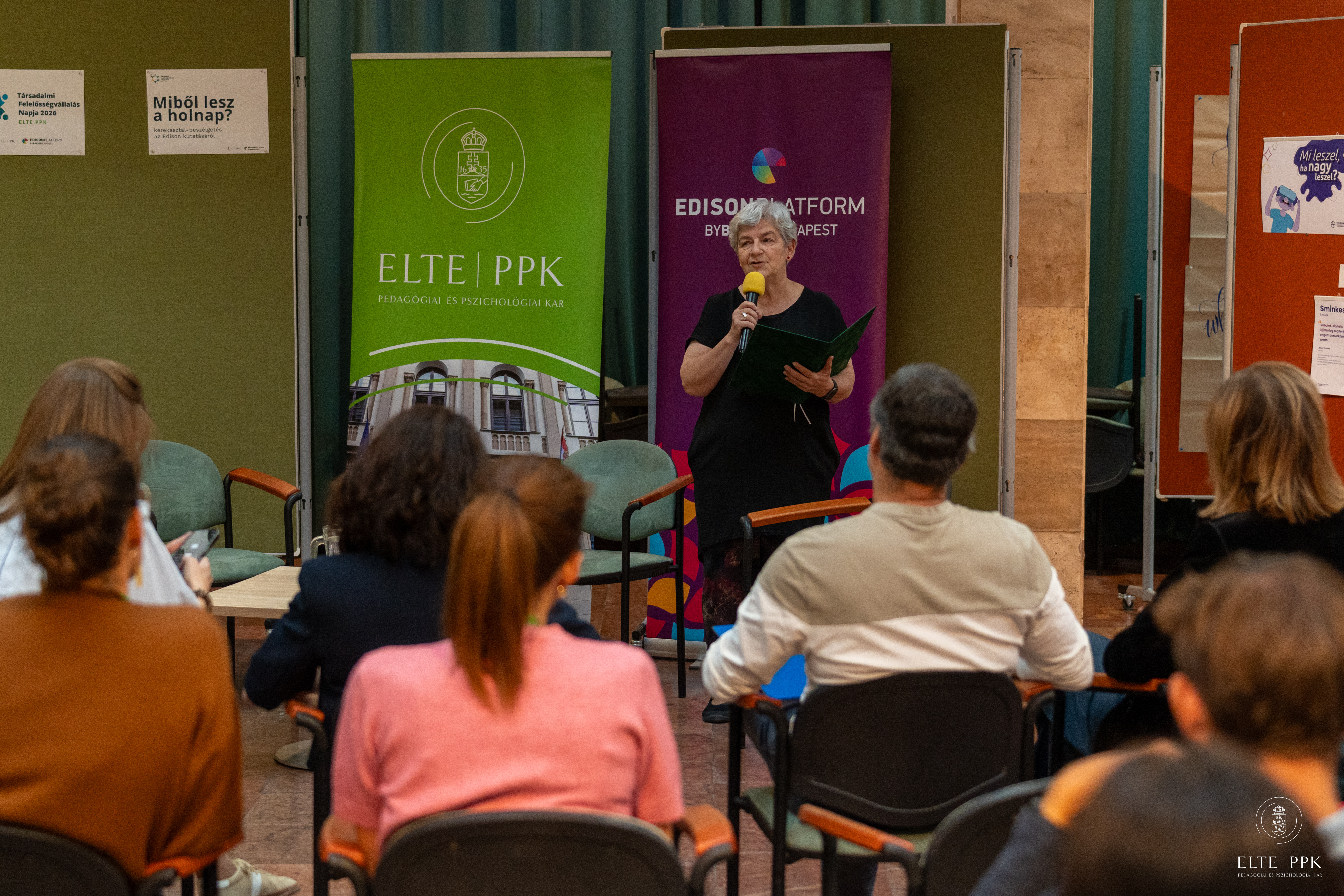
She highlighted three key areas of social responsibility: responsibility towards future generations, inclusion and volunteering. As she put it, the value of a university faculty is also demonstrated by how it treats those who need support. Volunteering, meanwhile, can provide experiences that cannot be gained in the classroom.
What skills will today’s children need?
The round-table discussion following the opening ceremony focused on preparing future generations. Dorottya Borsos, head of Edisonplatform, Szilvia Fodor, a lecturer at PPK, and Árpád Rab, a futurologist, discussed what knowledge and skills today’s children will need, with Krisztián Széll, a lecturer at PPK, acting as moderator.
Speaking about the research and drawing project titled "What will you be when you grow up?", Dorottya Borsos noted that it is now much harder to answer that question by naming a single specific profession. The pace of technological change is fundamentally reshaping what we regard as future-proof knowledge.
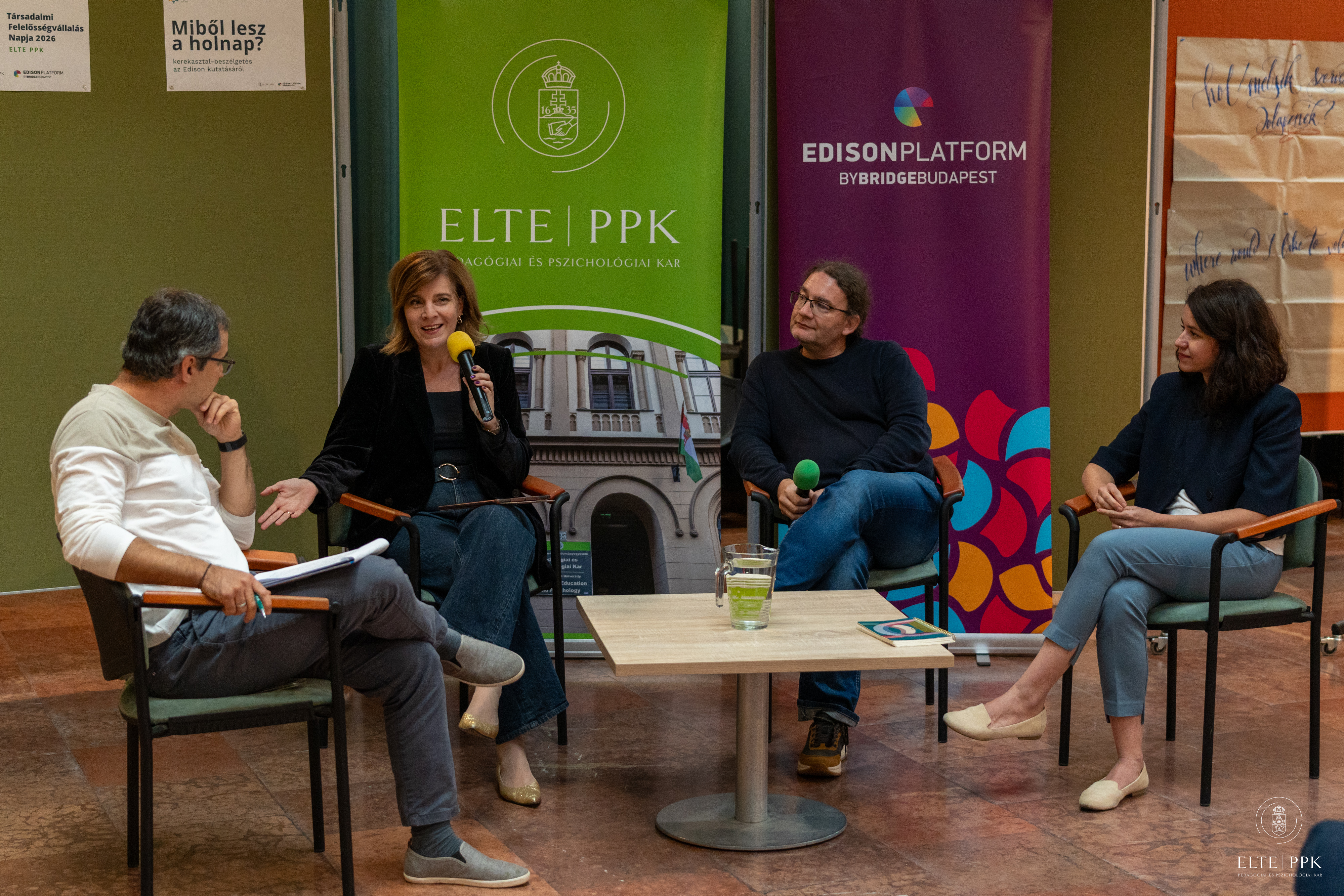
According to the participants, alongside critical thinking, curiosity and the ability to adapt to change, mental wellbeing is also an important part of preparing for the future. With regard to the role of schools, however, it was noted that it is not worthwhile to pit lexical knowledge against skills: alongside learning, schools can also create situations in which pupils learn to cooperate, make mistakes and cope with failure.
With regard to artificial intelligence and digital skills, questions have also arisen as to how we can make good use of AI, what and how we should teach in this regard, and where the responsibilities of schools, families and other stakeholders lie.
Social Responsibility in practice
During the afternoon, participants also had the opportunity to explore various forms of social responsibility through a series of workshops.
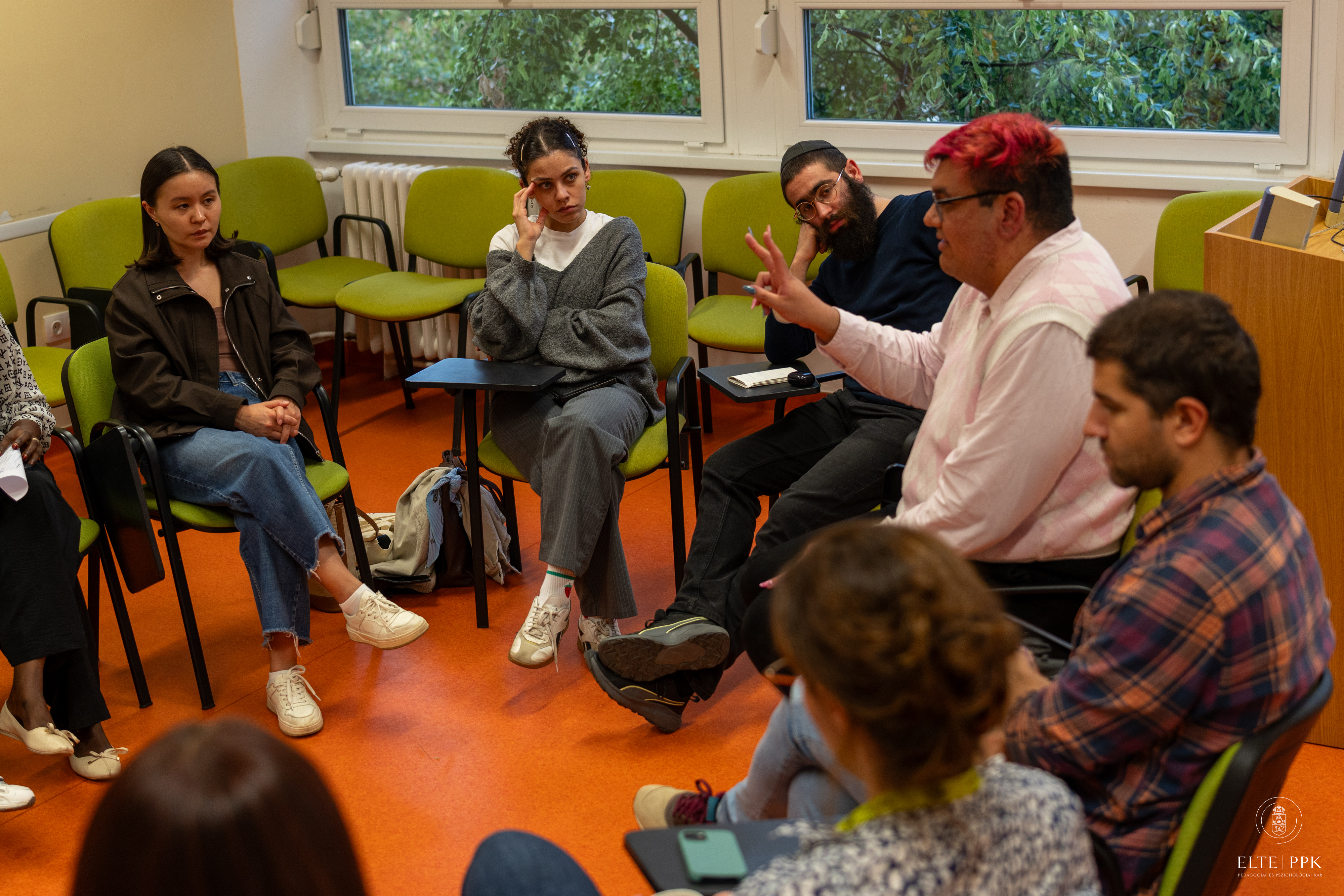
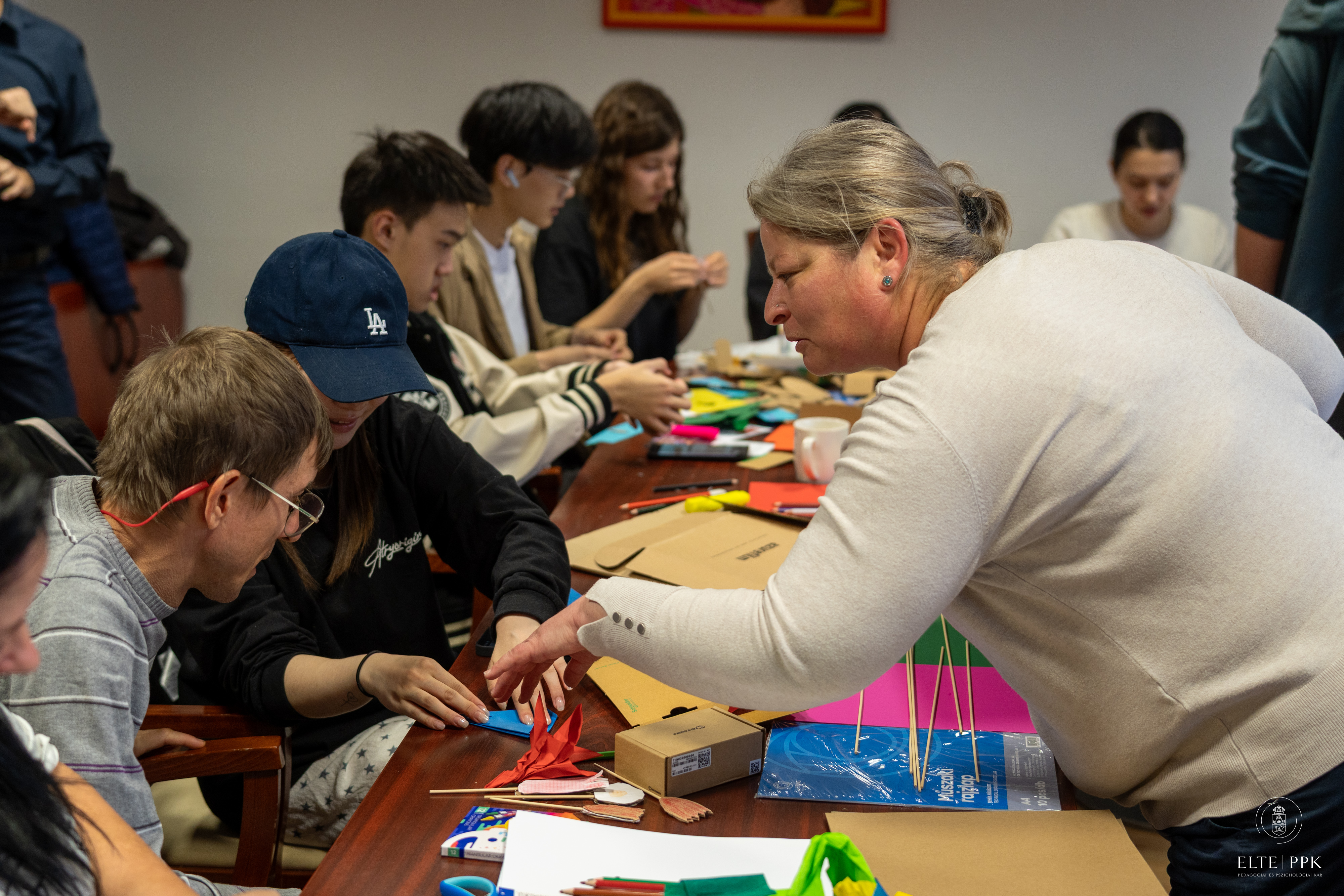
The craft workshop of Szivárvány Lakóotthon and Egy sima, egy fordított – Egyesület az Inklúzióért provided an opportunity to connect with people with disabilities. The sessions organised by the UCCU Roma Informal Education Foundation and the Bagázs Public Benefit Association provided an insight into the history, culture and everyday challenges of romani communities. AztaBanda’s drama-based educational workshop explored the dilemmas of volunteering and social responsibility; whilst during the discussion on university volunteering, former ELTE students shared their experiences.
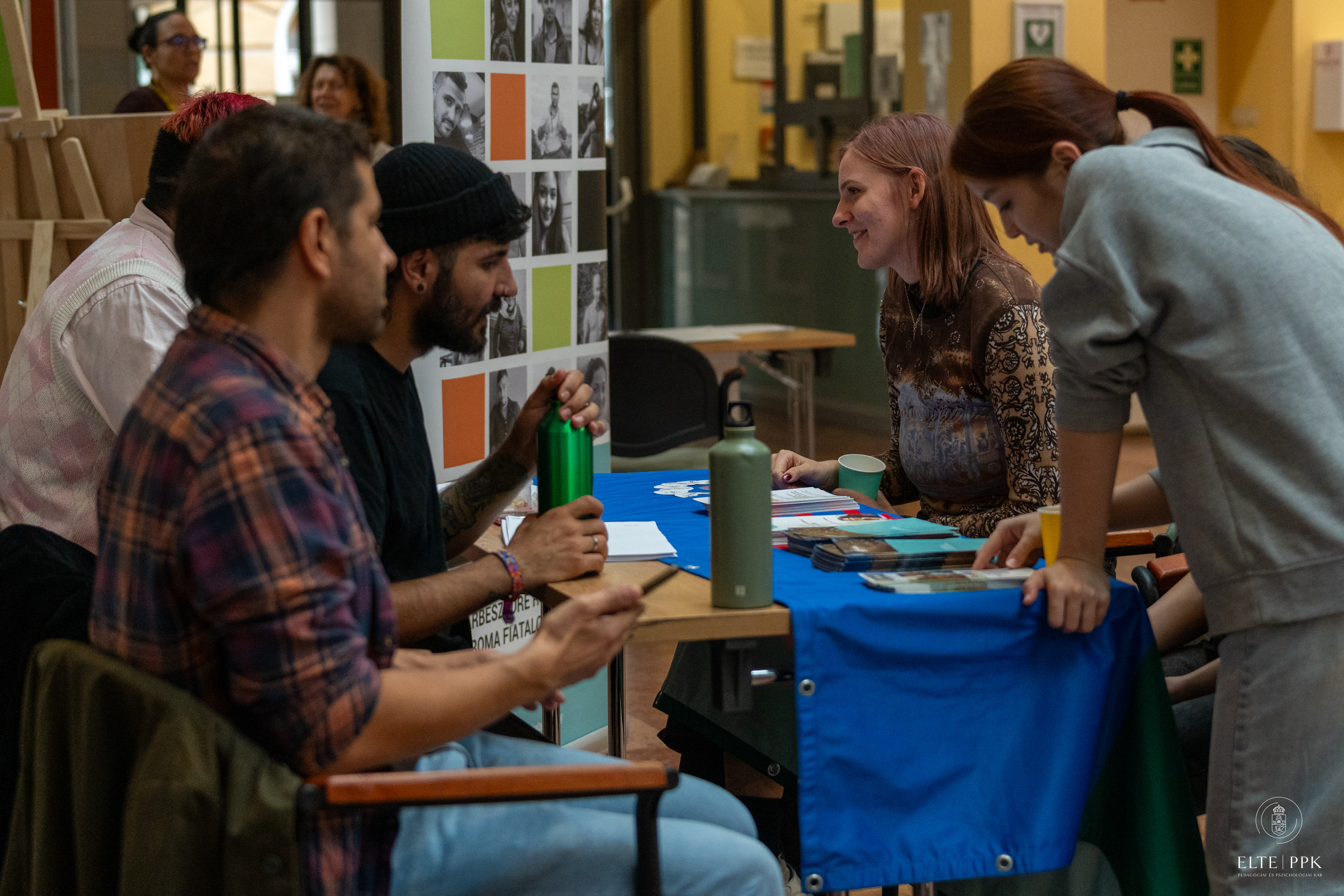
At the stands set up in the hall, those interested were able to find out about the work of other organisations and the volunteering opportunities they offer: KórházSuli presented its work in supporting the education of children with long-term illnesses, NoBadKid highlighted its support for children with behavioural difficulties, the Kacsakő Association showcased its efforts to build inclusive communities, and the Autonomia Foundation presented programmes supporting romani young people and communities.
Volunteering as a source of knowledge
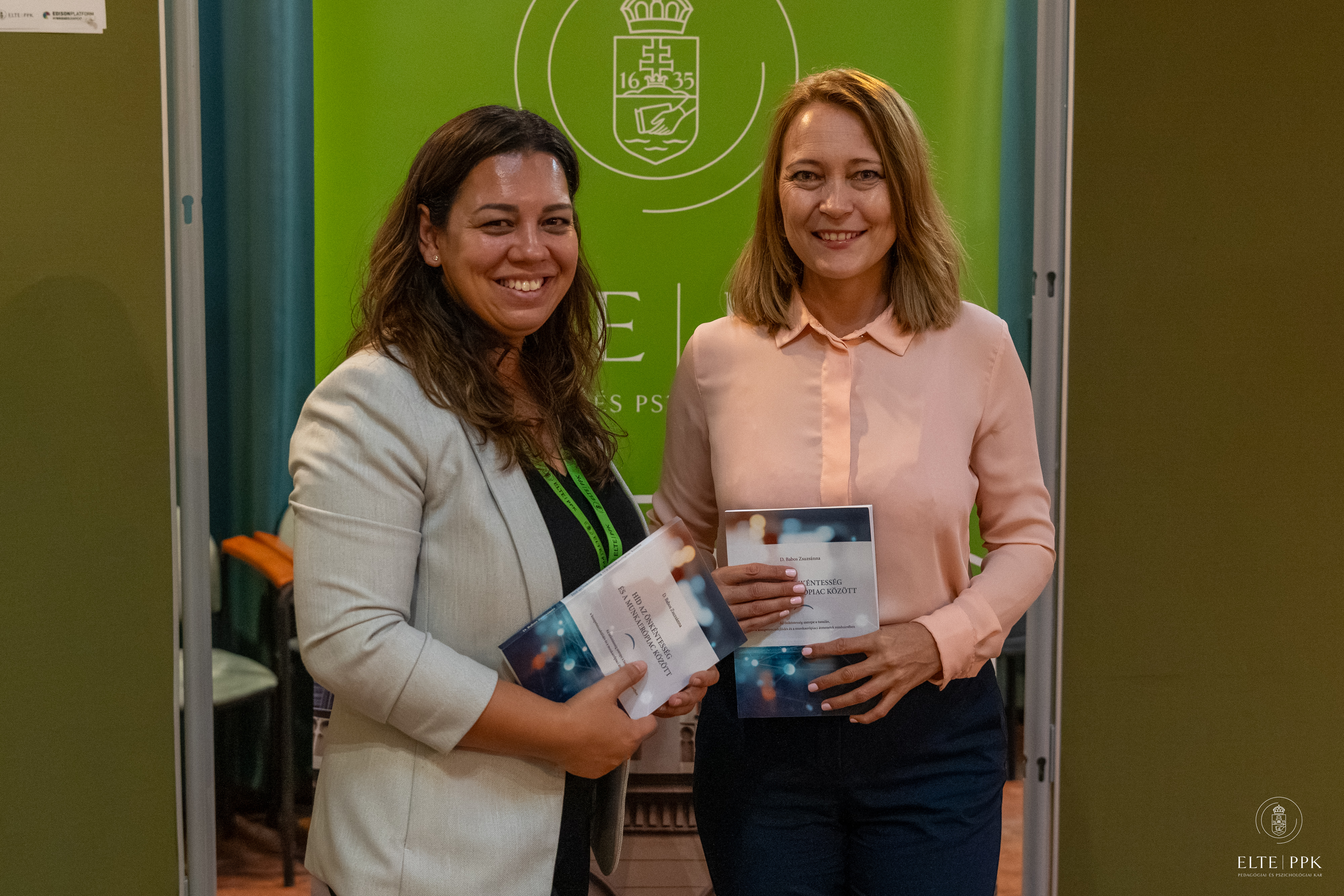
The afternoon concluded with the launch of Zsuzsánna D. Babos’s book, Híd az önkéntesség és a munkaerőpiac között ("A Bridge Between Volunteering and the Labour Market"). The book explores how experiences gained through volunteering can be transformed into knowledge and into skills that can be utilised for future success in the labour market.